November's Night Sky Over Miami: The Moon Meets Mars and Jupiter Before Dawn Monday, Then the Leonids and a Beaver Supermoon
November opens with a last-quarter Moon passing Mars and Jupiter before dawn on Monday, builds to the Leonid meteors on the night of November 17-18, and closes with the Full Beaver Supermoon on November 24 - the first supermoon since January.
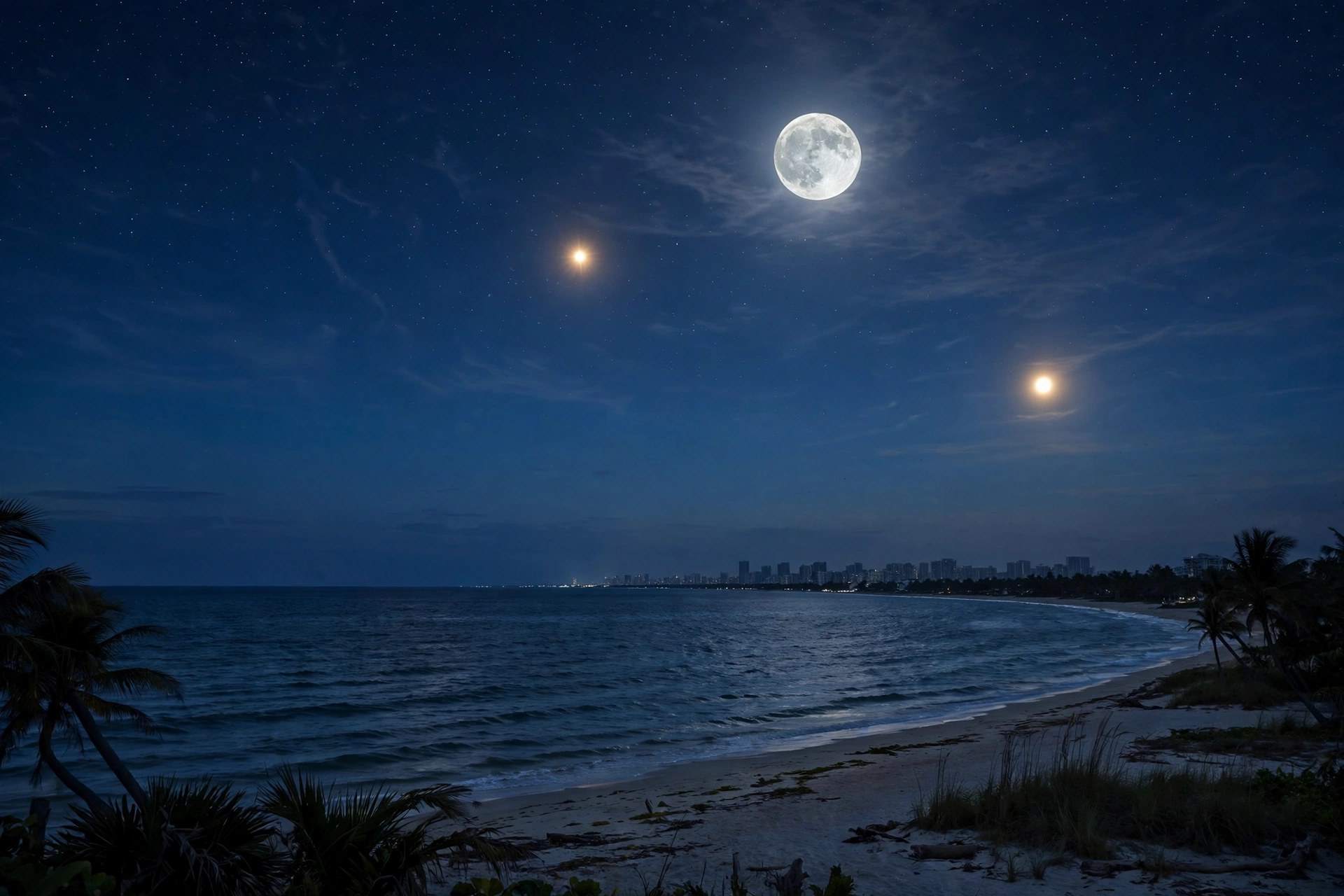
The first sky event of November arrives before most of Miami wakes up on Monday. The Moon, at last quarter on November 1, stands close to Mars and Jupiter in the constellation Leo before dawn on November 2, according to the November sky guides published this weekend, and passes near the bright star Regulus the following morning. Mars rises at around 1 a.m. local time at the start of the month with Jupiter following about half an hour later, so the grouping is a pre-dawn sight - and Sunday's end of daylight saving time, which moved sunset an hour earlier by the clock, makes the month's evening skies dark sooner as well.
The month's middle belongs to the planets and the meteors. Mars and Jupiter close on each other all month and reach their smallest separation, about 1.2 degrees, on November 16, with a four-planet alignment running November 13 to 22. The Leonid meteor shower peaks on the night of November 17 into 18 at about 15 meteors per hour under dark skies - a modest rate that rewards a dark spot away from city light, with the first-quarter Moon setting around 11:30 p.m. and clearing the later hours. A new Moon on November 9 gives the month its darkest nights in the week before.
The headline event is the month's last full Moon. On November 24 the Full Beaver Moon falls near perigee - about 360,770 kilometers from Earth in the guides' figures - making it a supermoon, the first since January 2026 and, per The Weather Network's guide, the first of four supermoons in a row through February. Supermoons appear slightly larger and brighter than an average full Moon, with the effect strongest at moonrise. Uranus reaches opposition on November 25, a telescope event rather than a naked-eye one. For Miami, the viewing rule for the whole month is the local one: the events are all in the sky - what decides them is cloud cover, and the station's live feed dries out from Wednesday onward.