Downtown Miami's Transit Zone Just Grew: Four Lots Near NE 4th Avenue Can Now Build Higher and Denser
Four privately owned lots by NE 4th Avenue and NE 17th Terrace are now inside the Metromover Subzone of the county's Rapid Transit Zone — a zoning change, signed October 6, that lets their owners pursue the kind of development that only makes sense next to a train.
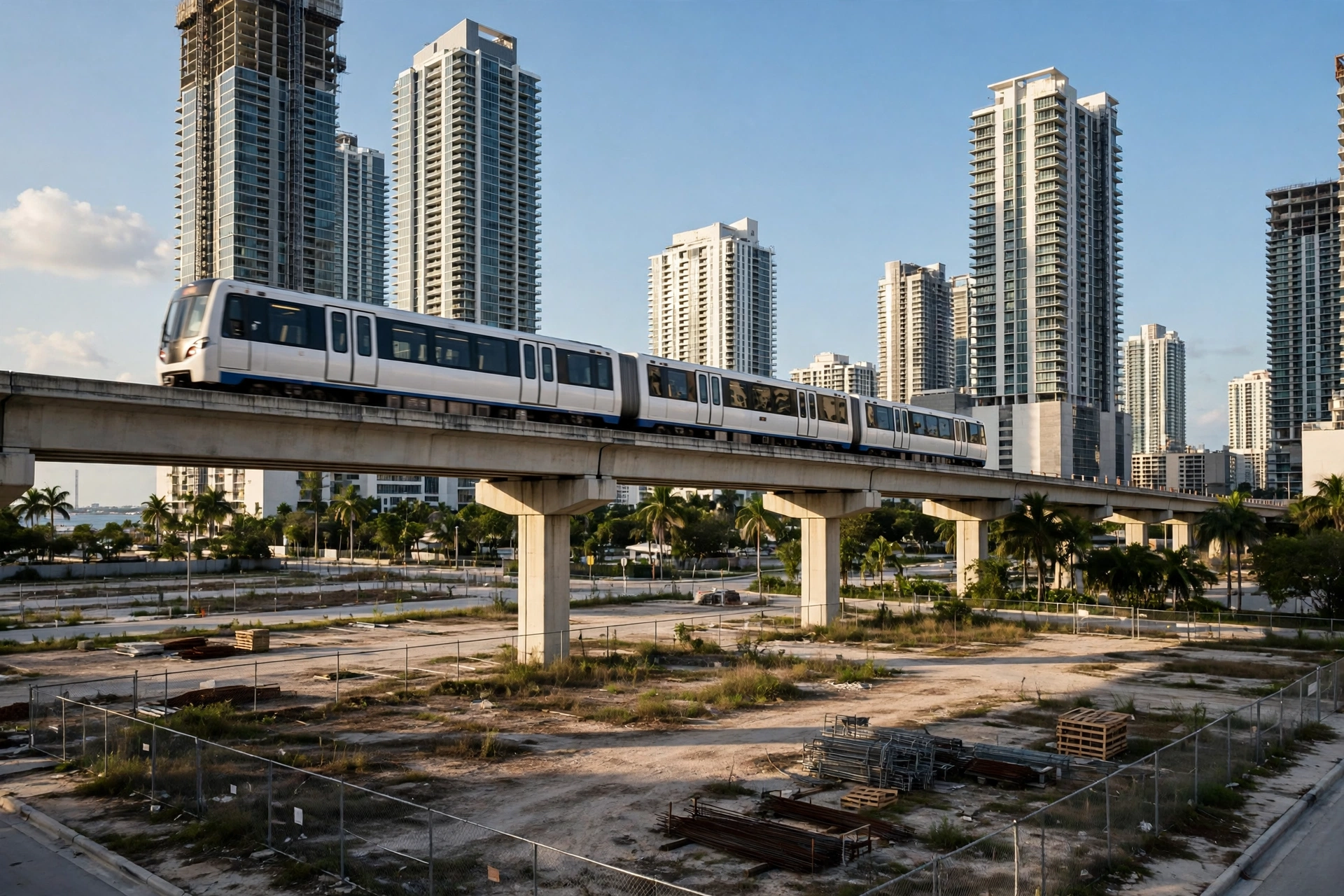
Downtown Miami's building map changed quietly, on paper, a month ago — and the change became news Monday. Four privately owned lots near NE 4th Avenue and NE 17th Terrace can now pursue higher-density, transit-oriented development after Miami-Dade County commissioners added them to the Metromover Subzone of the Rapid Transit Zone. Ordinance No. 26-82, sponsored by Commissioner Keon Hardemon and signed by Mayor Daniella Levine Cava on October 6, brings the parcels at 407 NE 17th Terrace and 1771, 1783 and 1795 NE 4th Avenue under county Rapid Transit Zone land-use regulations. All four property owners requested the inclusion.

The county's stated goal, in its own words, is to 'facilitate transit-oriented development' and promote 'higher density near transit hubs, thereby increasing transit ridership and offering residents greater access to employment, housing, and essential services.' The Metromover Subzone is not new — it was created in 2021 under Ordinance No. 21-33, and county land-use authority applies to everything inside it — but each expansion moves another set of downtown parcels from standard zoning into a regime designed around the free elevated loop that threads the core. The county projects the expansion will grow Metromover farebox revenue, add funds through the Transportation Improvement District and strengthen Miami-Dade's hand in competing for federal transit grants.
What has not happened yet matters as much as what has. No development applications have been announced for the four parcels, and no specific dollar figures were attached to the county's revenue and grant projections. Future proposals will go through the Rapid Transit Zone approval process, which includes Board oversight as a procedural safeguard, rather than standard zoning review. In other words: the permission structure for a denser downtown just widened by four lots. Whether anything rises on them is the next story, and it has not been filed yet — by anyone.